
AI Applications
AI Personalization: Smarter Marketing That Converts


Customers do not want to see the same message, advertisement, or product recommendation as everyone else. They are more likely to notice marketing that matches their interests and needs. AI personalization can help.
AI personalization uses artificial intelligence to study customer data, behavior, interests, and interactions. It then uses that information to provide more relevant content, recommendations, advertisements, offers, and customer experiences.
I have personally used AI tools to personalize content and understand what an audience may want. I have also noticed that platforms give me different recommendations based on my previous activities. For example, the content, videos, or advertisements shown to one person can be different from what another person sees.
In this article, I will explain how AI personalization works, where marketers use it, its benefits and challenges, and what businesses should consider before using it.
What Is AI Personalization?
AI personalization means using AI to create experiences based on individual customer interests and behavior.
Instead of showing the same content to every customer, AI can analyze information such as:
- Previous searches
- Products viewed or purchased
- Website activity
- Content engagement
- Search behavior
- Customer preferences
- Previous interactions
- Device and other contextual information
AI can then use these patterns to predict what a customer may find useful.
For example, if someone regularly watches videos about smartphones, a platform may recommend more smartphone-related videos. An online store may also recommend phone accessories or similar products.
The main purpose is simple: show the right content or offer to the right person at the right time.

How AI Personalization Works
AI personalization generally starts with collecting customer data. AI systems then analyze that information to identify patterns and interests.
The process can be understood in four steps:
Collect data: The system gathers information from customer interactions, searches, purchases, clicks, and other activities.
Analyze behavior: AI looks for patterns in the data and identifies customer interests.
Create personalized experiences: The system can recommend products, content, advertisements, or offers based on those patterns.
Learn from new activity: As customers continue interacting with a platform, AI can update its recommendations.
I have seen this process in my own online activities. Recommendations can change depending on what I searched for, watched, or interacted with previously. This shows how personalization can continue changing instead of remaining fixed.
AI Personalization vs. Traditional Personalization
Traditional personalization often depends on simple customer groups or predefined rules.
For example, a business might create one campaign for new customers and another for existing customers. Marketers may manually decide which message each group receives.
AI personalization can work with much larger amounts of data and identify more detailed patterns.
Instead of simply asking whether someone is a new or existing customer, AI can consider their recent activity, interests, previous purchases, and interactions.
This allows marketers to create more specific experiences without manually creating every customer group.

Hyper-Personalization in Marketing
Hyper-personalization takes personalization further by using more detailed and recent customer information.
Real-Time Customer Data
AI can use recent behavior to change recommendations and content quickly.
For example, if a customer starts searching for a particular type of product, an e-commerce website may adjust the products or advertisements shown to that customer.
This can make marketing feel more relevant because it reflects what the customer is interested in at that moment.
Predictive Personalization
AI can also use previous behavior to predict what a customer might want next.
For example, if someone repeatedly searches for a particular product category, AI may recommend related products before the customer actively searches for them.
The goal is not simply to understand what customers did in the past, but to use those patterns to make better recommendations.
Benefits of AI Personalization
Higher Engagement and Conversions
Relevant content is more likely to get attention than content that has nothing to do with a customer’s interests.
AI can help businesses personalize emails, advertisements, product recommendations, and website content. When customers see information that matches their needs, they may be more likely to click, interact, or make a purchase.
Customer Retention and Loyalty
Personalized experiences can also make customers feel that a business understands their needs.
Useful recommendations can save customers time because they do not have to search through everything themselves. Over time, this can contribute to a better customer experience.
More Efficient Marketing
AI can process large amounts of customer information much faster than manual analysis.
Marketers can use these insights to understand different audiences, create targeted campaigns, and improve their marketing decisions.
I have experienced a similar benefit while working with keywords. I have used SERPs and ChatGPT to create different types of keywords based on different needs and audiences. Adding more information about the audience can make the resulting ideas more relevant.
How AI Personalization Is Used in Marketing
Personalized Content and Offers
AI can help marketers create different content for different customer groups.
For example, a company can create different messages for beginners, experienced users, returning customers, or customers interested in different products.
AI can also help adjust offers according to customer behavior.
Personalized Product Recommendations
Product recommendations are one of the most visible uses of AI personalization.
Online stores can analyze previous searches, purchases, and browsing activity to recommend products that may be relevant to a customer.
This can reduce the amount of time customers spend searching for products.
AI-Powered Retargeting
AI can help businesses identify customers who have previously interacted with a product or website.
Instead of showing the same advertisement to everyone, businesses can create advertisements based on previous customer activity.
For example, someone who viewed a particular product may later see an advertisement related to that product or similar products.
Personalized Customer Interactions
AI chatbots and customer service systems can use previous interactions and customer information to provide more relevant responses.
Instead of asking customers to explain everything again, a system may use available context to understand their situation.
Dynamic Pricing
AI can also support pricing decisions by analyzing factors such as demand, customer behavior, and market conditions.
However, businesses need clear rules and human oversight when using AI for pricing because customers may react negatively if pricing appears unfair or unclear.
AI Personalization Strategies
AI-Powered Customer Segmentation
AI can divide audiences into smaller groups based on behavior, interests, and other information.
This can help marketers create more relevant campaigns instead of using one message for everyone.
A/B Testing and Continuous Optimization
Marketers can test different versions of content, advertisements, emails, or landing pages.
AI can help analyze the results and identify which versions perform better for different audiences.
This creates a continuous process of testing and improvement.
Omnichannel Personalization
Customers often interact with brands through several channels, including websites, email, social media, and mobile applications.
AI can help connect these interactions so that the customer receives a more consistent experience across different platforms.

Real-World Examples of AI Personalization
Businesses are already using personalization in different ways.
Personalized account-based marketing: Companies can create different messages for businesses based on factors such as company size, industry, or customer needs.
Personalized advertising: Advertising systems can use customer interests and previous behavior to show different advertisements to different audiences.
Personalized discounts: Businesses can provide different offers based on customer activity, purchase history, or loyalty.
These approaches demonstrate why AI personalization can be useful. The same product does not always need to be promoted in exactly the same way to every person.
Challenges of AI Personalization
Data Quality and Integration
AI personalization depends heavily on data. If the data is incomplete, outdated, or incorrect, the resulting recommendations may also be poor.
Businesses may also have customer information spread across different systems, making it difficult to create a complete picture of the customer.
Privacy and Security
Personalization requires customer information, which creates privacy and security concerns.
Businesses need to be careful about what information they collect, how they store it, and how they use it.
Customers should have clear information about data collection and appropriate choices about their data.
Customer Trust
Too much personalization can sometimes feel uncomfortable.
For example, a customer may become concerned if an advertisement appears to know too much about their personal activities.
There is a balance between making marketing relevant and making customers feel watched.

Implementation and Organizational Challenges
AI personalization also requires suitable technology, good data, skilled employees, and ongoing testing.
Businesses should not assume that simply adding an AI tool will automatically create successful personalization.
Best Practices for Implementing AI Personalization
Build a Strong Data Foundation
Start with accurate and useful customer data. Poor data can lead to poor recommendations.
Be Transparent About Data Usage
Customers should understand how their information is being used. Clear privacy practices can help build trust.
Start With Measurable Use Cases
Businesses do not need to personalize everything immediately. Starting with one or two specific use cases can make testing easier.
For example, a business could begin with personalized product recommendations or targeted email content.
Maintain Human Oversight
AI can provide recommendations and identify patterns, but marketers should still review important decisions.
In my experience using AI for SEO and content work, AI can provide useful ideas, but the output is not always ready to use without checking or modification. I see AI personalization in a similar way. AI can support marketing decisions, but human judgment is still important.
Emerging Trends in AI Personalization
Agentic AI
Agentic AI may allow systems to perform more marketing tasks automatically, such as analyzing results, adjusting campaigns, and responding to changing customer behavior.
Generative AI for Personalized Content
Generative AI can help marketers create different versions of emails, advertisements, product descriptions, and other content for different audiences.
This can make large-scale personalization faster.
Real-Time and Contextual Personalization
Personalization is moving toward using current context rather than relying only on historical data.
Customer activity, device, time, and other context can help AI decide what content or recommendations are most relevant.
Privacy-Focused Personalization
As personalization becomes more common, privacy will become even more important.
Businesses will need to find ways to provide useful personalization while collecting and protecting customer information responsibly.

The Future of AI Personalization in Marketing
AI personalization is becoming an important part of modern marketing because customers interact with businesses in different ways and have different needs.
From my own experience, I have found that AI can make marketing more useful when it understands the audience and provides different types of content for different people. I have also seen this directly through personalized recommendations based on my previous online activities.
One benefit I find especially useful is that customers may not need to search through many different platforms to find something relevant. A good AI recommendation can bring useful information, products, or content directly to them.
However, personalization should not mean collecting unlimited customer information or allowing AI to make every decision without review. Businesses need to balance relevance with privacy, transparency, accuracy, and human judgment.
The future of AI personalization will likely focus on creating more relevant experiences while giving customers greater control over their information. For marketers, the goal should not simply be to personalize more. It should be to personalize in ways that are genuinely useful to the customer.
FAQs About AI Personalization in Marketing
What is AI personalization in marketing?
AI personalization in marketing uses artificial intelligence to analyze customer data, behavior, interests, and interactions. It uses these insights to provide more relevant content, advertisements, product recommendations, offers, and customer experiences.
How does AI personalize marketing?
AI analyzes information such as browsing activity, previous purchases, searches, clicks, and content engagement. It identifies patterns and uses them to recommend content, products, advertisements, or offers that may be relevant to each customer.
What is an example of AI personalization?
A common example is personalized product recommendations on an e-commerce website. If a customer regularly views a particular type of product, AI can recommend similar or related products based on that activity.
What are the benefits of AI personalization in marketing?
AI personalization can help businesses improve customer engagement, create more relevant marketing campaigns, increase conversions, improve customer retention, and save time when analyzing large amounts of customer data.

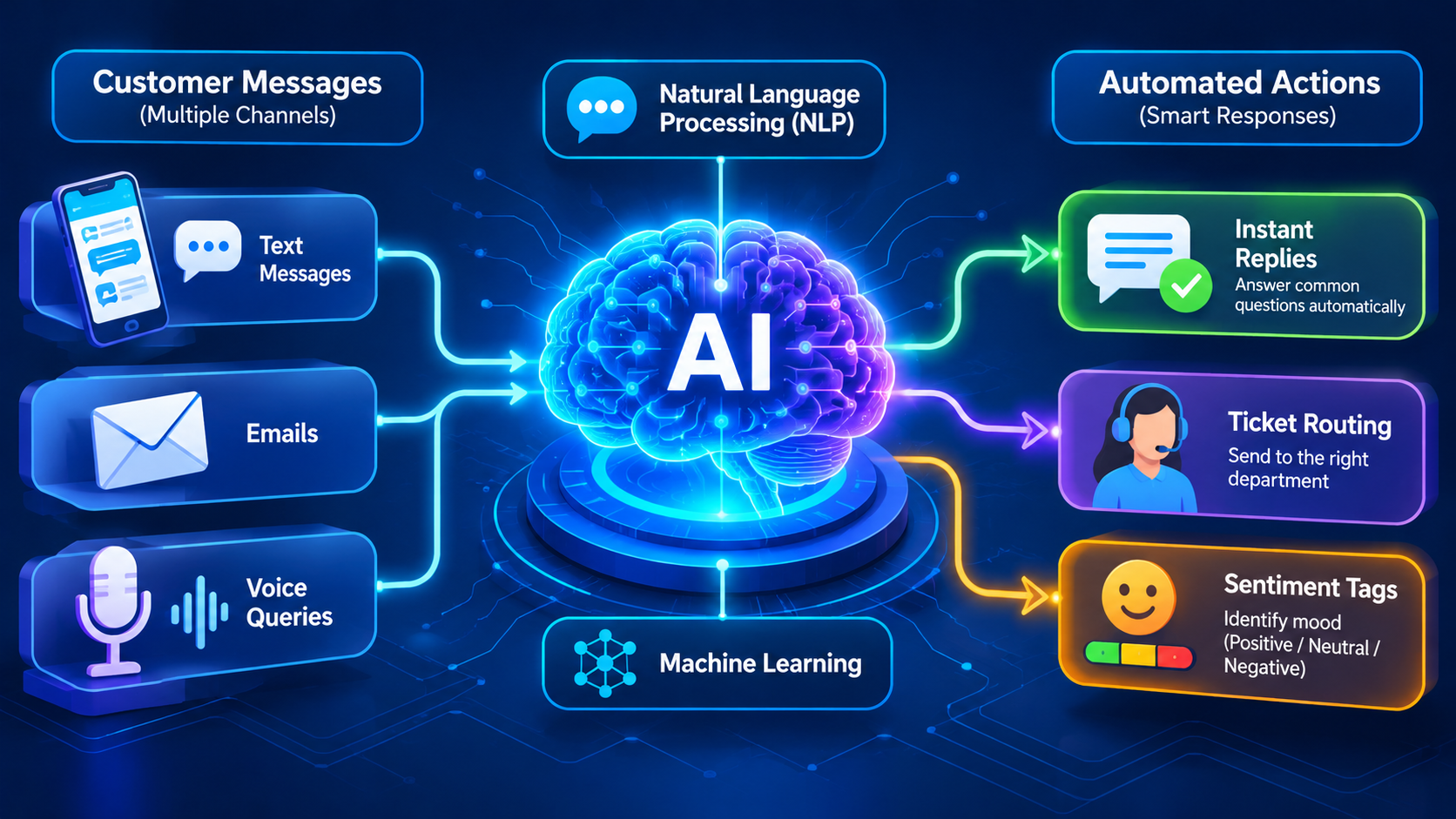
Customer service directly affects how people see a business. Customers want quick answers, helpful guidance, and solutions that do not require them to repeat the same problem several times. However, support teams often deal with hundreds of messages, long ticket queues, and limited time.
This is where AI can have a significant impact on customer service. It helps businesses answer common questions, organize support requests, prepare responses, and give agents useful information during customer conversations. Some AI systems can also handle tasks like tracking orders and updating customer account information.
I explored this topic by reviewing research and practical guides from customer service technology companies, including IBM, Salesforce, Zendesk, Zoho, Databricks, and CoSupport AI. I focused on how these systems work, where businesses use them, and what companies should consider before adopting them. My main takeaway is that AI can make customer support faster and more organized, but human judgment remains important when a customer needs understanding, flexibility, or personal attention.
What Is AI in Customer Service?
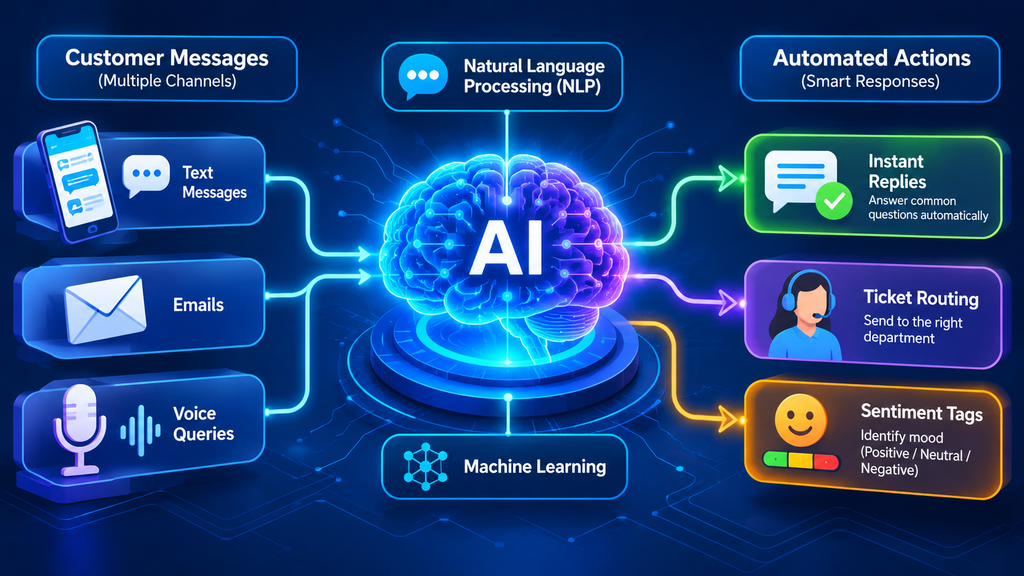
AI in customer service means using artificial intelligence to improve the way businesses communicate with and support their customers. It combines technologies such as natural language processing (NLP), machine learning (ML), generative AI, and AI agents to understand questions, find information, and help resolve problems.
For instance, a customer might ask an online store, “Can you tell me where my order is?”An AI chatbot can understand the question, check the connected order system, and provide the latest delivery information. The customer gets an instant response without having to wait for a support agent. AI in customer service also helps support teams work more efficiently behind the scenes.
It can summarize long conversations, suggest replies, identify urgent tickets, and find useful information from a company knowledge base.
The aim is not to automate every customer interaction. Good AI in customer service helps customers get answers more easily while giving human agents more time to handle complex requests.

How AI Works in Customer Service
AI in customer service relies on several technologies to understand customer questions and determine the best way to respond.
Natural Language Processing and Machine Learning
Natural language processing (NLP) helps computers understand human language. It allows AI systems to identify what customers are asking, even when they use simple, everyday words.
Machine learning helps systems identify patterns in information and improve predictions based on available data. For example, an AI support system can learn to recognize common billing questions, delivery complaints, or technical problems.
Together, NLP and ML help AI in customer service understand messages, classify tickets, and suggest relevant answers.
Generative AI and Predictive Analytics
Generative AI creates new content, including written replies, summaries, and conversational answers. A support agent can use it to prepare a response instead of writing every message from the beginning.
Predictive analytics uses historical and current data to identify possible future events. In customer service, it can help businesses identify customers who may need assistance, detect unusual account activity, or predict which support requests need urgent attention.
AI Agents and Traditional Chatbots
Traditional chatbots usually follow predefined rules or decision paths. They work well for simple questions, such as business hours or basic order information.
AI agents can handle more advanced tasks. Depending on their permissions and system integrations, they can retrieve account information, use business tools, follow multiple steps, and complete certain customer requests.
For example, a chatbot may explain a return policy. An AI agent could check whether an order qualifies for a return and start the return process. This is one reason AI in customer service is moving beyond simple question-and-answer conversations.
Key Benefits of AI in Customer Service
AI in customer service can improve both the customer experience and daily support operations. Its value depends on the quality of the system, its data, and how well it works with human employees.
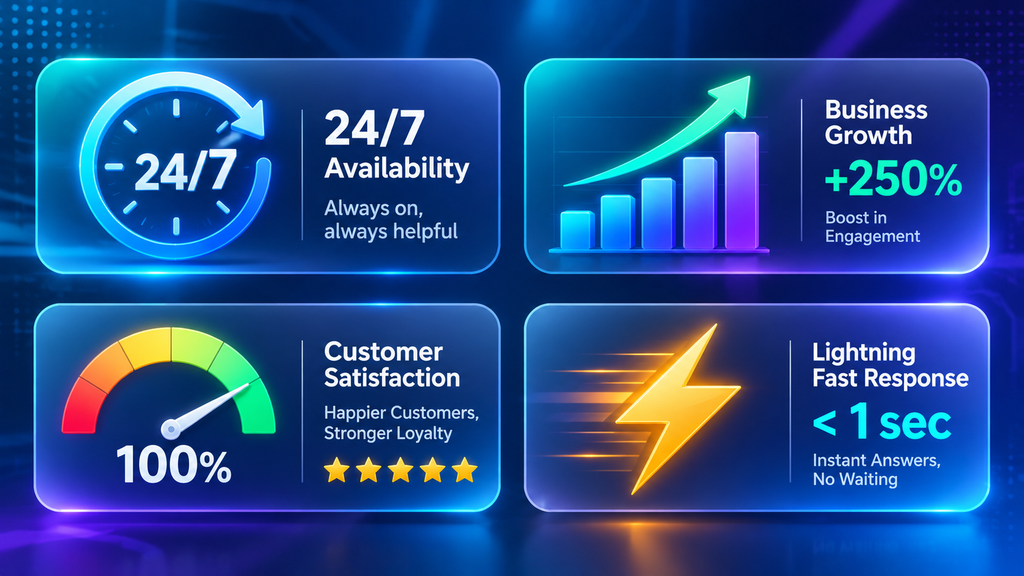
Faster Responses and 24/7 Support
AI chatbots and virtual assistants are available around the clock to respond to frequently asked customer questions. Customers do not always have to wait for business hours or an available representative.
This is useful for online stores, travel companies, banks, and businesses serving customers in different time zones. AI in customer service can provide immediate guidance for routine issues while directing more difficult requests to the right team.
Reduced Operational Costs
Customer support teams spend time answering repeated questions, sorting tickets, and preparing similar messages. Automating some of these tasks can reduce manual work.
Zendesk’s Effect Report states that 86% of customer experience leaders using AI and automation reported significant cost savings. This is a survey finding, not a guarantee that every business will achieve the same result.
AI in customer service may help businesses manage support demand more efficiently, especially when they receive a high number of routine requests.
Improved Agent Productivity
AI can support agents by summarizing customer conversations, finding relevant help articles, and suggesting possible responses.
For example, an employee taking over a long-running complaint may need to read many previous messages. AI can create a summary of the issue and previous actions, helping the employee understand the situation more quickly.
Salesforce also describes AI tools that provide agents with recommendations and step-by-step guidance based on customer information and company knowledge.
Personalized Customer Experiences
Customers expect businesses to recognize their needs and remember past interactions. AI in customer service can use customer history, preferences, and account details to provide more personalized support.
For example, an online store may recommend a product based on a customer’s previous purchases or help an agent understand which product the customer is asking about.
However, personalization must respect customer privacy. Businesses must ensure they only collect and use customer information they have permission to access and process.
Better Customer Satisfaction
Fast answers, fewer repeated questions, and smoother support can improve customer satisfaction. AI can also identify messages that show frustration and help support teams prioritize them.
IBM’s customer service research reports that mature AI adopters experienced a 17% higher customer satisfaction percentage. This is a reported comparison among mature adopters, not proof that AI alone caused the difference.
Practical Uses of AI in Customer Service
Businesses use AI in customer service for more than just website chatbots. It can help manage different steps throughout the customer support process.
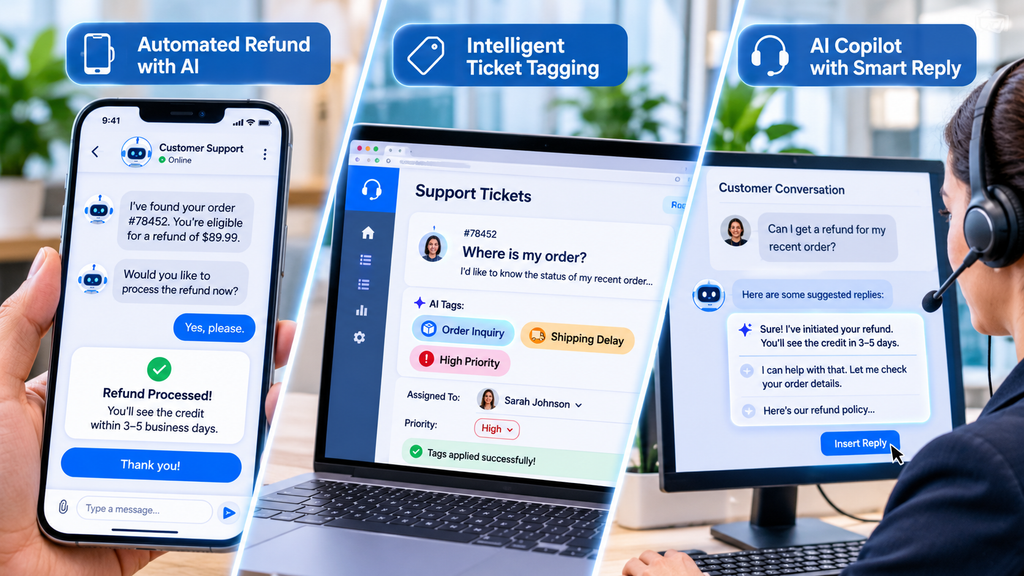
Automated Ticket Resolution and Intelligent Routing
AI can identify the topic of an incoming support request and send it to the correct department.
For example, a message about a missing payment can go to the billing team, while a login problem can reach technical support. AI can also identify urgent requests and help prioritize them.
Some AI agents can resolve routine issues independently, such as checking order status or helping customers reset account details. Businesses should set clear limits on which actions an AI system can complete without approval.
AI-Generated Responses and Ticket Summaries
Generative AI can prepare suggested replies using the customer’s message and information from approved company resources.
Agents can review and edit these responses before sending them. This can save time while keeping a human responsible for the final message.
AI can also summarize long email threads and support tickets. Zoho describes AI features that summarize customer requests, identify ticket sentiment, and help agents prepare responses.
Customer Self-Service and Knowledge Base Management
A knowledge base contains useful information such as product guides, troubleshooting steps, policies, and frequently asked questions.
AI in customer service can search this information and show customers the most relevant answers. It can also help agents find articles without searching through large collections manually.
Some systems identify common unanswered questions, helping businesses improve their knowledge base over time.
Sentiment Analysis and Customer Feedback
Sentiment analysis examines the language used in customer messages to estimate whether the tone is positive, negative, or neutral.
For example, a message containing repeated complaints or words showing frustration may be marked for urgent attention. A human agent can then review the conversation and respond appropriately.
Sentiment analysis is not perfect. It can misunderstand sarcasm, cultural expressions, or unclear messages. Businesses should use it as a support signal rather than treating it as a complete understanding of a customer’s feelings.
Predictive Support and Customer Behavior Analysis
AI can analyze customer activity and historical patterns to identify possible problems before customers contact support.
For example, a service provider may notice unusual account activity or repeated failed transactions. It can use this information to investigate the issue and contact the customer when appropriate.
Predictive support can help businesses move from reacting to complaints toward identifying problems earlier.
Voice AI and Multilingual Support
Voice AI allows customers to speak naturally with automated support systems. Instead of following long phone menus, customers may explain their issue in their own words.
AI-powered language tools can also help businesses communicate with customers who speak different languages. However, companies should test these systems carefully because accents, background noise, and language differences can affect accuracy.
Fraud Detection and Customer Segmentation
AI can examine transaction patterns and account activity to identify unusual behavior that may indicate fraud.
It can also group customers based on shared behaviors or needs. Support teams may use these insights to provide more relevant assistance.
These systems should be monitored carefully to reduce false alerts and avoid unfair decisions.
How AI Agents Work Alongside Human Support Teams
AI in customer service works best when businesses give both technology and people clear responsibilities.
AI agents can handle routine questions, collect basic information, and retrieve relevant records. Human agents can focus on situations that require judgment, empathy, negotiation, or exceptions to company policies.
For example, an AI agent may help a customer check an order’s delivery status. If the package is missing and the customer is upset, the system should make it easy to transfer the conversation to a human representative.
A good handoff should include the customer’s issue, previous messages, and actions already taken. This prevents customers from explaining the same problem again.
In my view, businesses should not measure success only by how many conversations AI can handle. They should also consider whether customers receive correct answers and can reach a person when necessary.

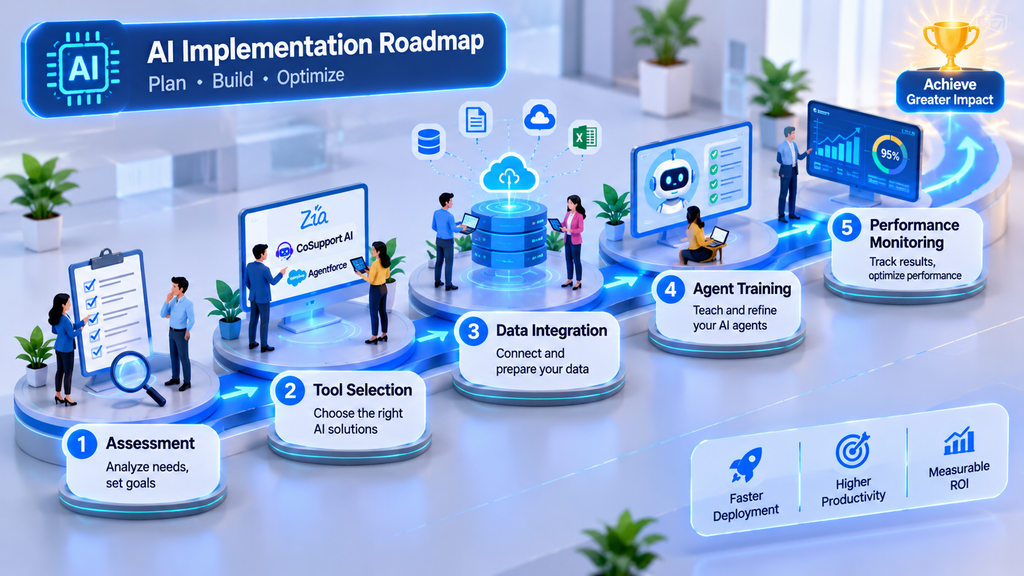
Popular AI Customer Service Tools and Software
Several companies offer AI-powered customer support features. The right choice depends on business size, support channels, budget, and existing software.
CoSupport AI
CoSupport AI offers AI agents for handling customer requests and AI assistants that help human support teams prepare responses. Its website describes integrations with platforms such as Zendesk, Freshdesk, Zoho Desk, Shopify, and HubSpot.
The company also publishes performance and security claims, including resolution rates and data protection measures. These are vendor-provided claims, so businesses should verify them through product demonstrations and their own testing.
Zoho Desk Zia
Zia is Zoho Desk’s AI assistant. Its features include ticket summaries, response suggestions, sentiment analysis, ticket field predictions, and knowledge base support.
It can help support teams identify common issues and find relevant information more quickly.
Salesforce Agentforce
Salesforce offers AI agents through Agentforce and AI assistance within its customer service products. These tools can use business data and company knowledge to help answer customer questions, support agents, and automate workflows.
Businesses already using Salesforce may find its integrations useful, but they should assess the features and costs required for their particular setup.
Zendesk AI
Zendesk provides AI features for customer support, including automated responses, ticket routing, agent assistance, and customer service analytics.
Zendesk also shares a customer case study about Catapult Sports. Following its use of Zendesk AI, the company reported a 50% reduction in first reply time, a 21% decrease in full resolution time, and a 1.8-point increase in average customer satisfaction. These results describe one customer implementation, not a typical outcome for every business.
Freshdesk AI
Freshdesk provides customer support software with AI-related features for ticket management and agent assistance. Businesses can explore its available automation and AI capabilities when comparing helpdesk platforms.
Before choosing any AI customer service tool, check current pricing, included features, usage limits, integrations, and data policies. Software plans can change over time.
How to Choose the Right AI Customer Service Software
Choosing software based only on the number of AI features can lead to unnecessary costs. Businesses should first understand what they want to improve.
Features and Integrations
Check whether the platform supports the tasks your team needs. These may include ticket routing, automated replies, chatbots, summaries, or voice support.
It should also work with your existing CRM, helpdesk, order system, or knowledge base.
Pricing and Implementation Costs
Compare subscription fees, per-agent charges, usage-based costs, setup expenses, and integration costs. Some providers charge according to the number of AI resolutions or conversations.
A low starting price does not always mean a low total cost.
Data Security and Privacy
AI in customer service may process names, contact details, order information, payment-related data, and private conversations.
Review the provider’s security documentation, data retention policies, access controls, and privacy terms. Make sure the system follows the laws that apply to your business and customers.
Accuracy and Customization
Test the software with real examples of customer questions. Check whether it gives correct answers, follows company policies, and uses an appropriate tone.
Also check whether you can control its responses, set limits on automated actions, and transfer uncertain cases to human agents.
How to Implement AI in Customer Service Successfully
A careful implementation helps businesses avoid unnecessary problems and gives teams time to understand the new system.
Identify Customer Support Problems and Goals
Start by finding the tasks that take the most time. These may include answering repeated questions, checking order details, or sorting support tickets.
Set clear goals, such as reducing first response time or improving the speed of ticket assignment.
Prepare Reliable Knowledge Bases and Customer Data
AI needs accurate information to provide useful answers. Review your help articles, product details, policies, and frequently asked questions before connecting them to an AI system.
Outdated or incomplete information can lead to incorrect responses.
Start With a Small AI Pilot
Do not automate every customer interaction immediately. Start with one low-risk task, such as answering common questions about delivery or business hours.
Test the system with real support scenarios and compare its performance with your existing process.
Monitor Performance and Improve Responses
Review AI conversations regularly. Look for incorrect answers, repeated customer questions, failed resolutions, and unnecessary transfers.
Use customer feedback and agent suggestions to improve the system.
Train Employees and Maintain Human Oversight
Employees should understand what the AI system can and cannot do. They should also know how to correct its suggestions and take over conversations.
For sensitive matters such as disputed payments, complaints, cancellations, or personal information, businesses should maintain suitable human review.
Challenges and Limitations of AI in Customer Service
Although AI in customer service offers useful features, it also creates challenges that businesses must manage.
Inaccurate Responses and AI Hallucinations
Generative AI can produce answers that sound correct but contain false information. This may happen when the system lacks reliable data or misunderstands a question.
Businesses should connect AI to verified knowledge sources, test its responses, and provide clear escalation options.
Customer Data Privacy and Security Risks
AI systems may handle sensitive customer information. Weak access controls or poor data practices can expose that information.
Companies should review vendor security, limit access to necessary data, and explain how customer information is used.
Implementation Costs and Technical Requirements
Some platforms require setup, integrations, employee training, and ongoing maintenance. Smaller businesses may not have the budget or technical skills for a complex system.
A focused pilot can help a company understand the cost and value before making a larger investment.
Employee Skills and Adoption
Employees may feel uncertain about new technology or worry that AI will replace their jobs.
Businesses should explain how AI in customer service will support their work and provide training. Human skills such as communication, problem-solving, and empathy remain important.
Lack of Human Empathy
AI can recognize certain emotional signals, but it does not understand human experiences in the same way people do.
A customer dealing with a serious complaint may need patience and personal attention. Businesses should make human support easy to reach instead of forcing customers through repeated automated replies.

How to Measure AI Customer Service Performance
Businesses should measure whether AI in customer service is actually improving the customer experience.
Important metrics include:
- First response time: How long customers wait for the first reply.
- Resolution time: How long it takes to solve a support issue.
- AI resolution rate: The percentage of requests resolved by AI without human assistance.
- Customer satisfaction score (CSAT): How customers rate their support experience.
- Escalation rate: How often AI conversations need human support.
- Agent productivity: Whether employees can resolve more issues or spend less time on repetitive tasks.
- Support cost: Whether the cost of handling customer requests decreases.
Do not focus on automation rates alone. A system that closes many tickets but gives poor answers is not delivering good customer service.
Compare AI-resolved cases with human-resolved cases. This helps businesses understand where AI performs well and where people still provide better results.
The Future of AI in Customer Service
AI in customer service is moving toward more capable systems that can understand context, use business tools, and complete tasks across different platforms.
Multi-agent systems may allow specialized AI agents to work together. One agent could identify a customer’s issue, another could retrieve account information, and a third could prepare a response or complete an approved action.
Predictive support is also likely to become more important. Businesses may use customer activity and service data to identify potential problems before customers submit complaints.
Voice and multimodal AI could make support more flexible by allowing customers to use text, speech, images, and documents in one interaction.
However, the future of AI in customer service should not be measured only by how much work technology can automate. Trust, privacy, accuracy, and human support will remain important.
Conclusion
AI in customer service helps businesses manage repetitive requests, respond faster, organize support tickets, and give employees useful information. From chatbots and AI agents to sentiment analysis and predictive support, these tools can improve different parts of the customer experience.
However, successful adoption requires more than choosing an AI platform. Businesses need reliable data, clear goals, strong privacy practices, regular testing, and trained employees.
My recommendation is to begin with one simple support task and measure the results before expanding automation. Let AI handle work that follows clear rules, while human agents remain available for sensitive or complicated situations.
The strongest approach to AI in customer service is a partnership between people and technology. AI can provide speed and consistency, while human employees bring empathy, judgment, and personal understanding.
Frequently Asked Questions About AI in Customer Service
1. What Are the Most Common Uses of AI in Customer Service?
The most common uses include chatbots, automated ticket routing, suggested replies, ticket summaries, sentiment analysis, knowledge base search, voice assistants, and predictive support. AI in customer service can also help agents find information and identify urgent customer requests.
2. Can AI Completely Replace Human Customer Service Agents?
No. AI can handle many routine requests, but human agents are still important for complicated problems, emotional conversations, unusual situations, and decisions that require judgment. AI in customer service is most useful when it supports employees rather than removing human assistance.
3. What Is the Best AI Tool for Customer Service?
There is no single best tool for every business. Zendesk AI, Zoho Desk Zia, Salesforce Agentforce, Freshdesk, and CoSupport AI offer different features and integrations. Compare their pricing, accuracy, security, support channels, and compatibility with your existing systems before choosing one.

AI now writes emails, flags fraud, and helps doctors read scans. One study estimated it could add $15.7 trillion to the global economy by 2030. Those numbers explain why the advantages of AI get so much attention. But training a single model like GPT-3 also used about 1,287 megawatt-hours of electricity, roughly what 120 US homes use in a year. The full picture matters.
I’m a computer science student who uses ChatGPT, Claude, DeepSeek, and Gemini for research and learning. I’m not an AI engineer, and I did not run lab tests for this guide. Instead, I read and compared seven articles from software companies, a university, and tech education sites, and I kept the points they agreed on. Below, you’ll find the biggest advantages of AI, the risks that come with it, and a simple checklist for using AI safely.
What Is Artificial Intelligence?
Artificial intelligence is a branch of computer science focused on building machines that can copy parts of human thinking. It runs on two main ingredients: data and algorithms. Developers feed large amounts of data into an algorithm, and the system learns to spot patterns, make predictions, and solve problems without someone writing new code for every task.
AI has several parts. Machine learning finds patterns in data. Natural language processing lets a system read and write human language. Computer vision helps it understand images, and robotics lets it act in the physical world. Many popular tools, such as chatbots, use large language models, which combine machine learning with language processing.
Each type of AI carries different risks. Rule-based AI is predictable but rigid, so it struggles with anything new. Classic machine learning learns from past data, but it can drift and pick up bias over time. Deep learning handles complex patterns at scale, but it needs huge datasets and a lot of computing power. Generative AI is flexible and creative, but it can state wrong answers with total confidence. Most tools today are also “narrow” AI, which means they do one kind of job well. A system that can do any task a human can, often called general AI, does not exist yet.
By 2026, most large companies have moved past small experiments and use AI in daily work. The question has shifted from “should we use it?” to “how do we manage it well?” Knowing the basics makes the advantages of AI easier to see, and it makes the limits easier to spot too.

Key Advantages of AI
The advantages of AI show up in almost every article I reviewed, and they fall into a few clear groups. Each benefit also comes with a condition: AI works best when the data is good, and a person keeps watch. I point out that condition in each section below.
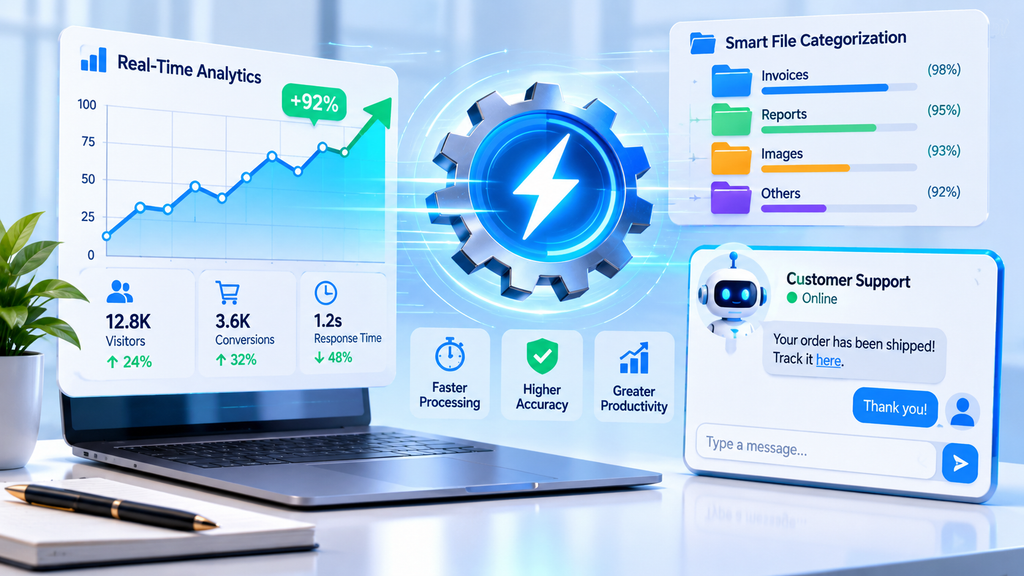
Automation and Productivity Gains
AI takes over the repetitive jobs that eat up a workday. Data entry, appointment reminders, invoice processing, report writing, and transcription are good examples. A machine does not get tired or distracted, so it handles these tasks the same way at 9 a.m. and at 9 p.m. That consistency cuts down on human mistakes, which is a big reason companies like it. For many teams, this is the first of the advantages of AI they notice.
The time savings can be large. One report found that teams using AI-assisted analytics cut the time they spend on data preparation and analysis by 40 to 60 percent in many cases. Results vary a lot with how clean a company’s data is. A support team, for example, can let AI sort tickets by urgency and draft a reply, and then a person checks the reply before it goes out. That setup keeps both the speed and the quality.
I think automation is also the most overrated of all the advantages of AI. People often assume AI can run a whole workflow alone, but the sources agree that automated systems need upkeep. Prompts drift, templates go stale, and business rules change. If you set up an AI workflow and never look at it again, its results can quietly get worse. A regular review is a smart habit.
Faster, Data-Driven Decision-Making
Businesses create more data than any person can read. Websites, apps, sensors, and sales records all add to the pile. AI can scan that pile in seconds and point out trends that would take a team weeks to find. A store can see which products are rising in which regions, and a bank can catch odd spending patterns before they turn into losses. This speed with data is one of the advantages of AI that business leaders mention most.
AI also helps with looking ahead. Normal reports tell you what happened last quarter. Predictive models estimate what is likely to happen next quarter, which helps teams plan inventory, staffing, and budgets earlier. Why does this matter so much? Because acting early usually costs less than reacting late.
The catch is data quality. AI amplifies whatever it finds in your data, good or bad. If your records are incomplete or out of date, the predictions will be too.
Personalization and Better Customer Experiences
AI learns from what people watch, click, and buy, and then it suggests things they are more likely to want. That is how streaming apps recommend a show and online stores suggest the right product. Done well, customers feel understood, and businesses see more engagement and more sales. Personalization is one of the advantages of AI that customers feel directly, even if they never think about the technology behind it.
Customer service has changed similarly. A customer used to wait for an email reply or sit on hold. Now an AI chatbot can answer common questions right away by pulling from a company’s help pages and account data. When a question gets too complicated, a good system passes the customer to a human agent.
This benefit comes with a privacy cost, which I cover later. The sources suggest telling customers clearly what data you use and giving them a way to opt out.
Round-the-Clock Availability and Scalability
Humans work roughly eight hours a day, and AI does not need sleep. Chatbots and AI agents can handle questions at night, on weekends, and on holidays, across email, chat, social media, and phone. A customer in a different time zone gets help right away instead of waiting until morning. Round-the-clock service is among the most practical advantages of AI for growing companies.
It also makes growth easier. If your case volume doubles during the holiday season, AI agents can take on the extra load without a large temporary team. Once the busy season ends, you can scale back down.
Still, availability does not mean independence. Hard or sensitive cases need a person, so you need clear paths for handing a conversation to a human.
Safer Work in Hazardous Environments
Some jobs put people in danger, and AI can step in. Robots already work in places with high radiation, deep mines, offshore oil rigs, and disaster zones. If a robot breaks, a company can rebuild it. A human worker cannot be replaced that way. Safety is one of the advantages of AI that can protect lives, not just save money.
Safety benefits reach beyond extreme settings. Predictive maintenance systems spot signs that a machine is about to fail, which can prevent accidents before they happen. Hospitals use AI to watch patients’ vital signs. AI can even screen video for harmful content, which spares human reviewers from seeing the worst of it every day.
Innovation and Easier Learning
AI speeds up research. Scientists can use it to sift through huge datasets and find patterns that point to new treatments or technologies. In healthcare, it can help spot diseases earlier in medical images and support triage decisions. In farming, it can predict the weather and suggest when to water crops. In transportation, it helps with route planning, traffic analysis, and self-driving technology. In cybersecurity, it can detect an attack in progress and help stop it.
AI can also learn on its own in some cases. Google’s AlphaGo taught itself the game of Go and, within days, came up with strategies that human players had not tried before. That kind of learning is still rare and costly, but it shows what is possible.
From my own use, the most underrated of the advantages of AI is much simpler: it makes hard information easier to understand. When I use ChatGPT, Claude, or Gemini to break down a technical concept, I can ask follow-up questions until it makes sense. That helps people learn new topics and become more productive even without advanced technical knowledge. It rarely makes headlines, but it may touch more people than any robot or self-driving car.
Innovation also supports jobs. Some research points to AI opening up new roles in fields from finance to tech, and that is part of how the big economic projections add up.
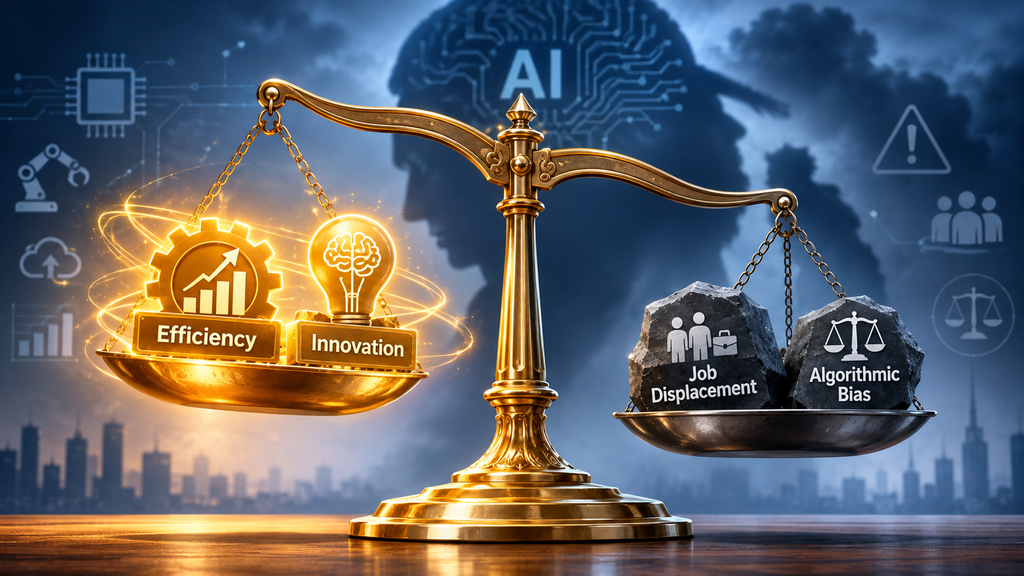
Disadvantages That Balance the Advantages of AI
None of the articles I read claimed AI is free of problems, and I would not trust one that did. Every efficiency gain comes with a tradeoff in fairness, safety, cost, or trust. Knowing these risks does not mean you should avoid AI. It means you can plan for them and keep the advantages of AI working for you.
Job Displacement and Changing Skills
AI can automate tasks that many people do today, especially routine ones like data entry, basic reports, scheduling, and simple customer triage. One analysis expects the fastest change through 2028 in administrative work and routine analysis. The impact depends more on the task than the job title. Roles built on trust and judgment, such as therapy, skilled trades, and medical sign-off, look more resilient. For managers, the sources suggest redesigning roles instead of cutting them, and starting reskilling before jobs change. As a student about to enter the job market, I find that encouraging. Learning to work with AI looks smarter than competing against it.
Algorithmic Bias
AI learns from past data, and past data often reflects past unfairness. A hiring tool trained on ten years of resumes from a male-dominated industry may learn to rank women’s resumes lower. A credit model that uses zip code as a shortcut can repeat patterns of segregation. People also tend to assume a computer decision is neutral, which lets unfair results go unnoticed. One common check is the disparate impact ratio, which compares outcomes across groups. A ratio below 0.8 usually draws regulatory attention. Audits should continue after launch, since bias can appear later as data changes.
Privacy and Security Risks
AI systems are hungry for data. Some vendors keep the prompts people type and may use them to improve their models, so a private-feeling chat may not be private at all. Security threats also differ from normal software. In a prompt injection attack, someone writes an input that tricks the AI into ignoring its rules. A few habits help: give AI tools the least access they need, never paste confidential information into unapproved tools, and ask vendors whether they log prompts, how long they keep them, and whether they train on your data. “What happens to the data I share?” is one of the first questions I ask about any new tool.
Hallucinations and Wrong Answers
Generative AI sometimes makes things up, and these errors arrive in the same confident tone as correct answers. One article claimed this happens close to 30% of the time, though the rate depends heavily on the tool and the task. These systems predict the next likely word from patterns instead of checking facts. For casual use, that is annoying. For healthcare, law, or finance, it can be harmful. Specific prompts help, and so does telling the AI to say “I don’t know.” Retrieval-augmented generation, or RAG, feeds the AI trusted documents so it answers from real sources. Most importantly, a person should check anything important.
Cost and Environmental Impact
One estimate puts a fully built AI solution at $20,000 to well into the millions. Companies also pay for data preparation, staff training, security, and fixes after launch. Using an existing model with prompts grounded in your own data is the cheaper path, and starting with one narrow use case lets you test the value first. On the environment, training GPT-3 took an estimated 1,287 megawatt-hours, and a 2024 study estimated that training a frontier model can release over 500 metric tons of carbon dioxide. Running a model every day can eventually use more energy than training it. Smaller, task-specific models and cloud providers with renewable energy commitments help.
Lack of Transparency and Human Judgment
Modern AI can be a “black box.” A model may deny a loan or flag a transaction, and even its creators may struggle to explain why. In industries where the law requires an explanation, that is a serious problem. AI also lacks empathy. One study found an AI more often assigned negative emotions to people who were not white. For sensitive conversations, such as giving bad news to a customer, a person usually does better. That is why I always ask whether a task would be better handled by a human before I hand it to AI. Relying on AI too much has a quiet risk too, because people can lose their grip on how a process works.
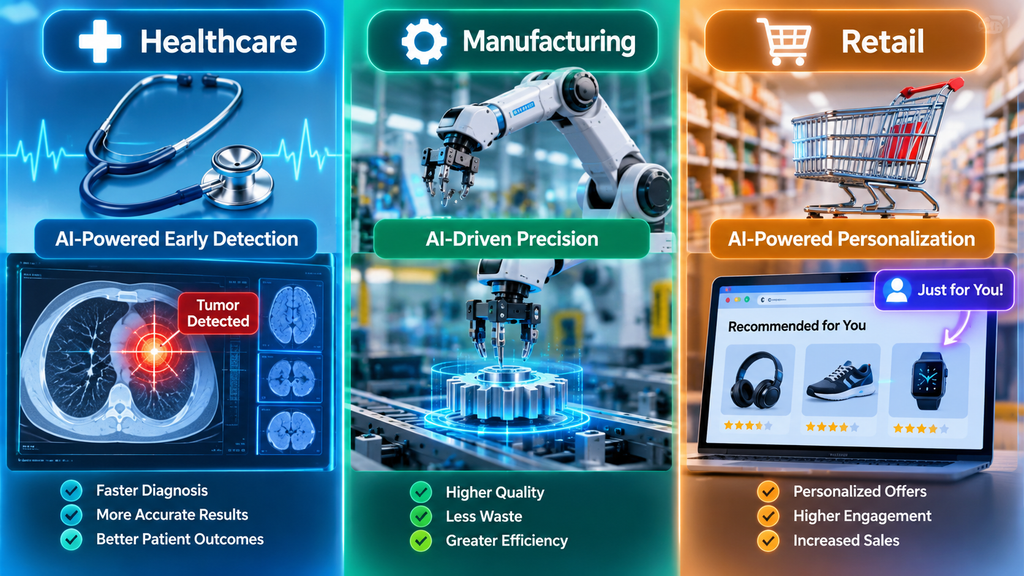
Advantages of AI Across Industries
AI looks different in every industry, and so do the risks. In healthcare, it supports diagnosis and treatment planning, which can mean earlier detection and less workload for doctors. The risks are misdiagnosis and exposed patient data, so a physician should review every diagnosis. In financial services, AI detects fraud in real time and applies consistent standards to credit decisions, but it can also bring bias into lending and flag honest customers by mistake. Regular bias audits and human review of appeals help.
Retail uses AI for demand forecasting and personalization, which cuts wasted inventory and improves the shopping experience. The tradeoff is tracking customer behavior, so clear data practices and opt-outs matter. Manufacturing uses it for quality control and predictive maintenance, which means fewer defects and less unplanned downtime. Because sensors can miss edge cases, human inspection samples are a smart addition.
Do you notice the pattern? In every industry, the benefit is speed and scale, and the safeguard is a human who stays involved.
How to Get the Most From the Advantages of AI
Using AI responsibly does not mean avoiding it. Organizations that pair AI with clean data and human review get more reliable results than those that deploy it on unchecked data. Based on the articles I compared, five practices come up again and again.
Start with data governance. Decide who owns the data, how good it needs to be, and who can access it. Keep humans in the loop for high-stakes choices, because AI should speed up human judgment, not replace it when health, money, jobs, safety, or legal rights are on the line. Begin with a small, clear use case where you can measure success and where a mistake will not cause serious harm. Monitor performance continuously, since AI gets worse as data patterns change, and keep records of what the AI recommended and what a person decided. Finally, train your team so they know when to trust AI and when to double-check.
For everyday users and small teams, I use a shorter checklist before I adopt any new tool. Does it solve a real problem? Is it easy to use? Are its results accurate? How much does it cost? What happens to the data I share with it? Would a human handle this task better? If any answer raises a doubt, I slow down. Larger organizations can add questions from the sources: Is the data governed and current? Does someone own the outputs? Can you explain why the AI made a recommendation?

When to Skip AI Entirely
Even the best advantages of AI do not apply everywhere. If your data is incomplete or messy, AI will magnify those flaws, and standard reporting or simple rule-based automation will serve you better until your data improves. If mistakes would be severe and hard to catch, a person or a predictable system is a safer choice than a tool that works on probabilities.
Skip it, too, when no one is accountable. If nobody owns the AI’s outputs or has the power to override them, you have a gap that needs fixing first. The same goes for regulated settings where you cannot explain or audit the AI’s decisions. Waiting a few months to do it right is almost always cheaper than rushing and cleaning up later.
The Future of AI in Business
Three trends stand out in the sources. First, agentic AI is moving from idea to reality. Instead of answering one prompt at a time, AI agents now coordinate multi-step tasks, make small decisions, and hand off to humans when they reach the limits of their authority. That turns AI from a tool you ask into a helper that works inside rules you set.
Second, strong governance is becoming a real advantage. Companies that built good data practices and audit trails early now launch AI faster and with fewer problems than those still catching up. The gap between governed and ungoverned AI keeps growing.
Third, the roles of people and machines are settling down. AI handles volume and pattern spotting, and humans handle judgment, exceptions, and accountability. Teams that design their work around that split see steadier results, and they get more out of the advantages of AI over time. Rules and ethics will keep evolving too, so companies should expect more questions from regulators and customers about how their AI works.
Conclusion: Making the Most of the Advantages of AI
The advantages of AI are real. It can save time, find patterns, make learning easier, and support better decisions. It can also make mistakes, repeat bias, and create privacy and security problems when nobody checks it. The tool itself is not the deciding factor. How you use it, what you measure, and how much human oversight you keep make the difference.
If you take one thing from this guide, I hope it is this: start small, keep your data clean, and keep a person in charge of the important calls. That approach lets you gain the benefits while keeping the risks in check.
Frequently Asked Questions
What are the main advantages of AI?
The main advantages of AI are automation, faster decisions, personalization, and 24/7 availability. AI handles repetitive tasks without getting tired, scans large amounts of data in seconds, and suggests products or answers that fit each person. It can also do dangerous jobs, like working in high-radiation areas, so humans do not have to.
What are the biggest disadvantages of AI?
The biggest disadvantages of AI are bias, privacy risks, wrong answers, high costs, and job changes. AI learns from past data, so it can repeat old unfairness. It can also make things up, called hallucinations, and some vendors store the data you share. A person should always check important results.
What are some examples of AI in daily life?
You probably use AI every day without noticing. Common examples include email spam filters, voice assistants, shopping and streaming recommendations, navigation apps, fraud alerts from your bank, and chatbots. Tools like ChatGPT, Claude, and Gemini also help people research, write, and understand hard topics in simple words.

Over 77% of people use an AI-powered service or device, yet only 33% say they use AI, according to one survey of 6,000 consumers. That gap explains why AI applications can feel invisible even while they shape your day. Your spam filter, your map app, and your bank’s fraud alerts all count.
I am a BS Computer Science student who studies AI applications through research, hands-on testing, and my own AI-focused blog. I do not hold formal AI certifications, and I have not led a client project, so I only share what I have actually tried. To build this guide, I also reviewed six public articles from cloud, hardware, education, and analytics companies and rewrote their shared ideas in my own words.
You will learn what AI applications are, which technologies power them, where industries use them, and what I learned from using them in real content work. By the end, you will know where AI applications help, where they fall short, and how to start using them wisely.
What Are AI Applications and Why Do They Matter?
AI applications are software programs that use artificial intelligence to handle tasks that normally need human thinking. Those tasks include learning, solving problems, understanding language, recognizing images, and making decisions. Some AI applications do small, repeated jobs, such as sorting junk email. Others handle complex work, such as reading a medical scan or scoring the risk of a loan.
Regular software follows rules that a programmer wrote in advance. AI applications learn from data instead. They study many examples, find patterns, and use those patterns to predict or decide. That is why a bank system can flag a strange charge it has never seen before. In every source I reviewed, the goal of AI applications was the same: automate work, raise efficiency, and uncover insights that are hard for a person to find alone.
Experts sort AI applications in a few helpful ways. Analytical AI applications study data to support decisions, such as a search engine that ranks results or a fraud system that flags a charge. Generative AI applications create something new, such as text, images, or code. Some sources also separate reactive systems from learning systems. A chess program built for one job is reactive, while a recommendation engine improves as it sees more of what you watch. A fifth group, called expert systems, copies the decision-making of a human specialist in areas like medical diagnosis and engineering design. Knowing these groups helps you ask a useful question before you pick a tool: do I need help with a decision, a first draft, or a repeated task?
AI agents are a growing kind of tool among AI applications. An agent does more than give an answer. It takes action across several steps, such as booking a meeting, handling an insurance claim, or finishing a purchasing process with little human help. That power is useful, but it also means these AI applications need careful instructions and human checks, especially in healthcare and finance. I would let an agent handle repetitive work and keep a person in charge of the results that matter most.
I first became interested in AI applications because I wanted technology to make everyday tasks easier. Writing, research, automation, and problem-solving pulled me in. I also enjoy explaining how AI applications work in simple language, because you should not need a technical background to use them well. Why does that matter? AI applications now touch almost every field, and understanding them helps you choose the right tool instead of following hype.

Core Technologies Behind AI Applications
Most AI applications rely on machine learning, which lets computers learn from data and improve over time. Machine learning drives recommendation systems, fraud detection, and predictive analytics. Three more building blocks sit on top of it, and each one gives AI applications a different skill.
Natural Language Processing and Generative AI
Natural language processing, or NLP, lets computers read, understand, and write human language. It powers chatbots, voice assistants, translation tools, spam filters, and sentiment analysis, which reads the mood of customer reviews. Generative AI builds on NLP to create new text, images, and code. Tools such as ChatGPT, Claude, and Gemini write drafts and summaries, GitHub Copilot helps with code, and Midjourney turns short descriptions into pictures.
This is the type of AI applications I know best. Before I used them, I thought AI mostly answered questions. Then I watched one follow detailed instructions, organize complex information, suggest improvements, and adjust a piece for a new audience. NLP still has weak spots, including sarcasm, idioms, and subtle meaning, so you should read a sample of any results yourself.
Computer Vision and Robotics
Computer vision lets machines make sense of pictures and video. Image classification labels a whole image, object detection finds several items in one scene, and facial recognition checks identity from facial features. These skills let a self-driving car spot a pedestrian and help doctors find signs of disease on a scan. Tools such as TensorFlow and Google Cloud Vision API help developers build them. Facial recognition raises privacy and bias questions, so these AI applications need clear consent and careful use.
Robotics adds movement. General Motors placed a robot on an assembly line in 1961 to help with dangerous welding jobs, and NASA’s Perseverance rover now collects samples on Mars. Warehouse robots use vision to pick and pack orders, and some robots help surgeons make precise cuts. Robotics is outside my own hands-on experience, but it shows how far AI applications reach beyond screens.

AI Applications in Everyday Life
You likely meet AI applications dozens of times a day. Voice assistants such as Siri, Alexa, and Google Assistant answer questions, set reminders, and control smart devices. When you type into a search bar, AI predicts what you want to ask and fills in the rest. Your phone’s autocorrect learns the words you use most, and writing tools such as Grammarly check grammar, style, and readability.
Social media runs on AI applications too. Platforms like Facebook, Instagram, YouTube, and TikTok study what you like and serve more of it to keep you watching. You have more control than you might expect. You can shape your feed by searching with care and by liking, commenting on, and sharing only the posts you enjoy.
Shopping and travel are full of AI applications as well. Online stores suggest products, adjust prices based on supply and demand, answer questions through chatbots, and estimate delivery times. Google Maps uses live traffic data to find the fastest route, not only the shortest one, and ride apps use similar data to set arrival times and fares. Gmail uses machine learning to block billions of spam messages every day, and Netflix and Spotify study your history to guess what you will enjoy next. When your bank texts you about a suspicious charge, a model flagged it before any person looked at your account. Wearable devices also track health numbers such as heart rate and activity.
Prediction is another quiet job for AI applications. Because AI can process large amounts of data at once, it finds patterns and uses them to forecast what comes next. Stores use it to plan inventory, factories use it to guess when a machine needs service, and advertisers use it to write copy, change images by location or age group, and move budget toward the best-performing ads. Analytics tools turn the same skill into forecasts and live numbers on revenue, cost, and customer experience. You may never see these AI applications, yet they help decide what appears on your screen and which prices you see.
Gaming has used AI applications for years. Computer programs have beaten human champions at chess, Go, StarCraft 2, and the quiz show Jeopardy. Inside games, Minecraft builds endless worlds, and The Last of Us gives non-player characters their own reactions to your choices.

AI Applications Across Industries and Business
Every industry in my sources used AI applications in its own way, but the pattern stayed steady. AI handles large amounts of data, finds what matters, and frees people for harder work.
Healthcare:
AI applications read X-rays, MRIs, and CT scans to help find cancer, fractures, and nerve disorders. One source reports that these models can often beat experienced radiologists in accuracy, though doctors still make the final call. Ambient AI scribes listen to a visit and write structured notes, which cuts paperwork and helps lower clinician burnout. AI also finds high-risk patients before a health event, models how diseases may spread, and can shorten early drug testing from years to months.
Finance:
Finance runs on pattern recognition, so it uses AI applications heavily. Every transaction at a major bank is scored by a model in real time, and odd activity, including possible money laundering, is flagged before a person reviews the account. Credit scoring now blends credit history with behavior signals. JPMorgan Chase reported that an AI coding assistant raised developer productivity by up to 20%, and Kensho, part of S&P Global, produces analyst-quality reports in minutes instead of days.
Manufacturing:
Predictive maintenance has delivered some of the clearest returns among AI applications. Sensors feed models that predict a failure before it happens, so repairs happen before the line stops. Siemens, GE, BMW, and Bosch use AI to spot early warning signs, schedule service by failure risk, and catch defects a tired human eye might miss.
Retail:
Amazon’s recommendation engine reportedly drives about 35% of its revenue, and its pricing system updates millions of prices many times a day. Smaller stores use similar AI applications to forecast demand, support visual search, and offer chat assistants.

Education, transportation, and agriculture
In schools, AI applications track progress, offer targeted practice, act as virtual tutors, and help with grading and scheduling. In transportation, they power route planning, traffic control, autopilot, and driver aids such as lane-keeping assist. Farmers use drones and sensor data to check plant health, spot pests early, and estimate yields.
Business operations
Most large companies now run several AI applications at once. Bank of America’s assistant, Erica, has passed 3 billion client interactions. Support chatbots answer questions, sales tools score leads, HR tools screen resumes, and finance tools process invoices without manual typing. If you want to try AI applications in a business, start with one process that takes a few hours each week, test it for 30 to 60 days, and measure the time saved.
Choosing among AI applications becomes easier when you match the tool to a clear problem. Ask what task takes the most time, what data the tool will use, and who will check the results. Other examples from my sources include legal document review, insurance claims processing, and customer churn prediction, which show how wide the field has grown. Smaller teams do not need big budgets to begin. Many AI applications now come as ready-made tools or APIs, so you can prove an idea works before you spend money on custom work.
My Experience Using AI Applications for Content and SEO
My strongest area is digital content creation and digital marketing, especially SEO and website content. ChatGPT is the tool I use most often, and I use it for research, brainstorming, understanding technical ideas, organizing outlines, and improving written content. I should be clear about my limits. I have not worked with a business client on a formal AI project, and I have not built or launched a chatbot yet. What I can share is how AI applications behave inside my own daily workflow, and I prefer tools that give useful, accurate results over tools that only produce large amounts of text.
Through my learning and practical work, I have explored how AI applications can support keyword research, content planning, writing, and optimization. They perform best when I need ideas, a clear structure, or a faster start on research. They perform worst when a task needs fresh facts, personal stories, or original thinking. Knowing that split saves me time, because I know which parts to hand to AI and which parts must stay mine.
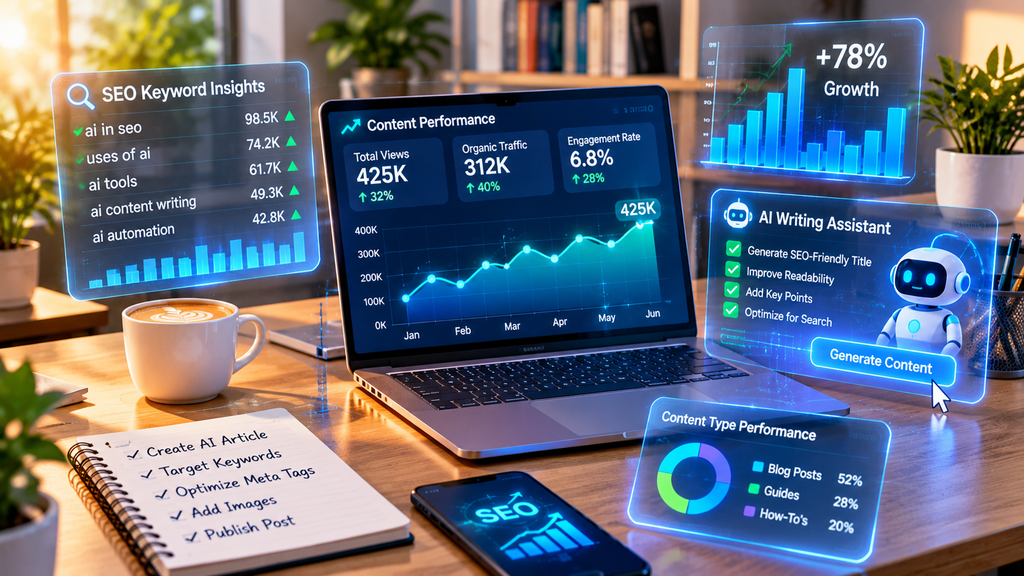
How I Write Prompts for AI Applications
My process starts with the exact task and the result I want. Then I add context, name the target audience, set the writing style, and list any limits. If the first answer misses the mark, I refine the prompt with sharper instructions. My best tip is to avoid vague requests, because AI applications respond best to clear directions. Reviewing and improving the output matters as much as writing the first prompt. This simple routine cuts the time I spend on early research and planning for my blog.
Prompt writing is also a small version of what developers do. They fine-tune models on labeled examples, test prompts in several rounds, and choose between real-time and batch processing. I want to explore AI automation and chatbot building next to gain that deeper technical experience.
Where AI Applications Fell Short for Me
AI applications sometimes give confident answers that are not fully correct. While working on research and website content, I found facts that needed extra checking, editing, or clarification. I also saw repeated wording and generic explanations. Content from AI can lack originality and real experience, which are the very things readers and search engines look for. That is why I treat AI as an assistant and not as a replacement for research, critical thinking, and human judgment.
My Rules for Privacy, Bias, and Human Oversight
I do not share sensitive personal or confidential information with AI platforms. I also know that AI answers can carry bias or errors, so I never treat a response as fully reliable. My main rule is simple: review, verify, and edit before I use or publish anything. I disagree with the idea that AI will fully replace human creativity and decision-making, and I think claims that AI can handle every task alone are exaggerated. Still, underestimating AI applications would be a mistake, since they already help with research, content creation, automation, and problem-solving.
Benefits, Challenges, and the Future of AI Applications
The biggest benefit of AI applications is time. They take over slow, repeated tasks, so people can focus on creative and complex work, and that often leads to cost savings. They also read huge amounts of data faster than any team could, which helps banks study markets and helps hospitals scan records. Customers gain too, through better product suggestions and quick chatbot answers at any hour. A Grand View Research projection cited in one article says the global AI market could reach about 3.5 trillion US dollars within ten years.
Building AI applications takes more steps than using them. Developers often start with a pre-trained large language model and adapt it with fine-tuning or careful prompts. After that, they decide how it will run. Real-time inference suits fraud checks and chatbots because answers are needed right away, while batch inference suits large jobs that can wait. Methods such as quantization and pruning shrink models so they run faster on phones. Teams also watch for versioning problems and keep monitoring after launch. My advice for beginners is to start with a ready-made model or API and only invest in custom training once the idea works.
The risks are real. AI applications need large amounts of good data, strong computing power, and careful work to connect them to older systems. Biased data can lead to biased results, personal information needs protection, and people deserve to know when a system is making decisions about them. Workers whose tasks may be automated deserve thought as well. I recommend keeping a person in charge of high-stakes choices and checking tools for bias on a regular schedule, such as every quarter.

The sources point toward AI applications that act more on their own. AI agents may book meetings, handle claims, and run whole business steps with little help, while healthcare may move toward real-time personalized care and robots may work in messy places like farms and homes. Smaller models on phones and other devices will bring AI closer to where data is created. I do not believe this will replace human creativity. I believe the best results will come from people who pair AI applications with their own knowledge and judgment.
If you are starting, pick one weekly task, test an AI tool on it, write clear prompts, and review every answer before you use it. That habit will teach you more than any list of tools. Are you ready to try it? Your first small test of AI applications may be the most useful lesson you get this year. I plan to keep testing AI applications and sharing honest results on my blog, so you get real experience instead of hype.
Frequently Asked Questions
1. What are AI applications in simple words?
AI applications are software programs that use artificial intelligence to do tasks that normally need human thinking, such as understanding language, spotting patterns in images, or flagging a strange bank charge. Common examples include voice assistants, spam filters, map apps, and tools like ChatGPT.
2. Can AI applications replace human writers and researchers?
No. In my own work with ChatGPT, AI applications help most with brainstorming, outlines, and early research. They can still give confident but incorrect answers, repeat wording, and lack real experience. I review, verify, and edit everything before I publish it, so AI works as an assistant and not a replacement.
3. How can a beginner start using AI applications safely?
Pick one task you do every week and test one AI tool on it. Write clear prompts that state the task, the audience, the style, and any limits. Never share private or confidential information, and check every answer before you use it.
-

 AI in Digital Marketing1 month ago
AI in Digital Marketing: Practical Uses, Benefits, and Strategies
-

 AI Applications4 weeks ago
AI Content Optimization: What It Is and Why It Matters
-

 AI Technologies4 weeks ago
AI in App Development: How to Build the Best Apps From Idea to Production
-

 AI Applications3 weeks ago
AI in Gaming: Uses, Benefits, Examples, and Future Trends
-

 AI Technologies1 month ago
AI in Web Development: A Practical Guide to Coding, Powerful Tools, and Real-World Experience
-
 AI in Agriculture1 month ago
AI in Agriculture: Uses, Benefits, Challenges, and Future Trends
-

 AI Applications4 weeks ago
AI in Construction: Uses, Benefits, Tools, Challenges, and Future Trends
-

 AI Technologies4 weeks ago
AI in Cybersecurity: Uses, Benefits, Risks, and Future Trends